

Solutions
Zero liquid discharge at a fraction of the thermal cost
Osmosys membrane trains concentrate industrial and municipal brines to 280,000 mg/L before crystallization, reducing the evaporator and crystallizer to a small finishing step.
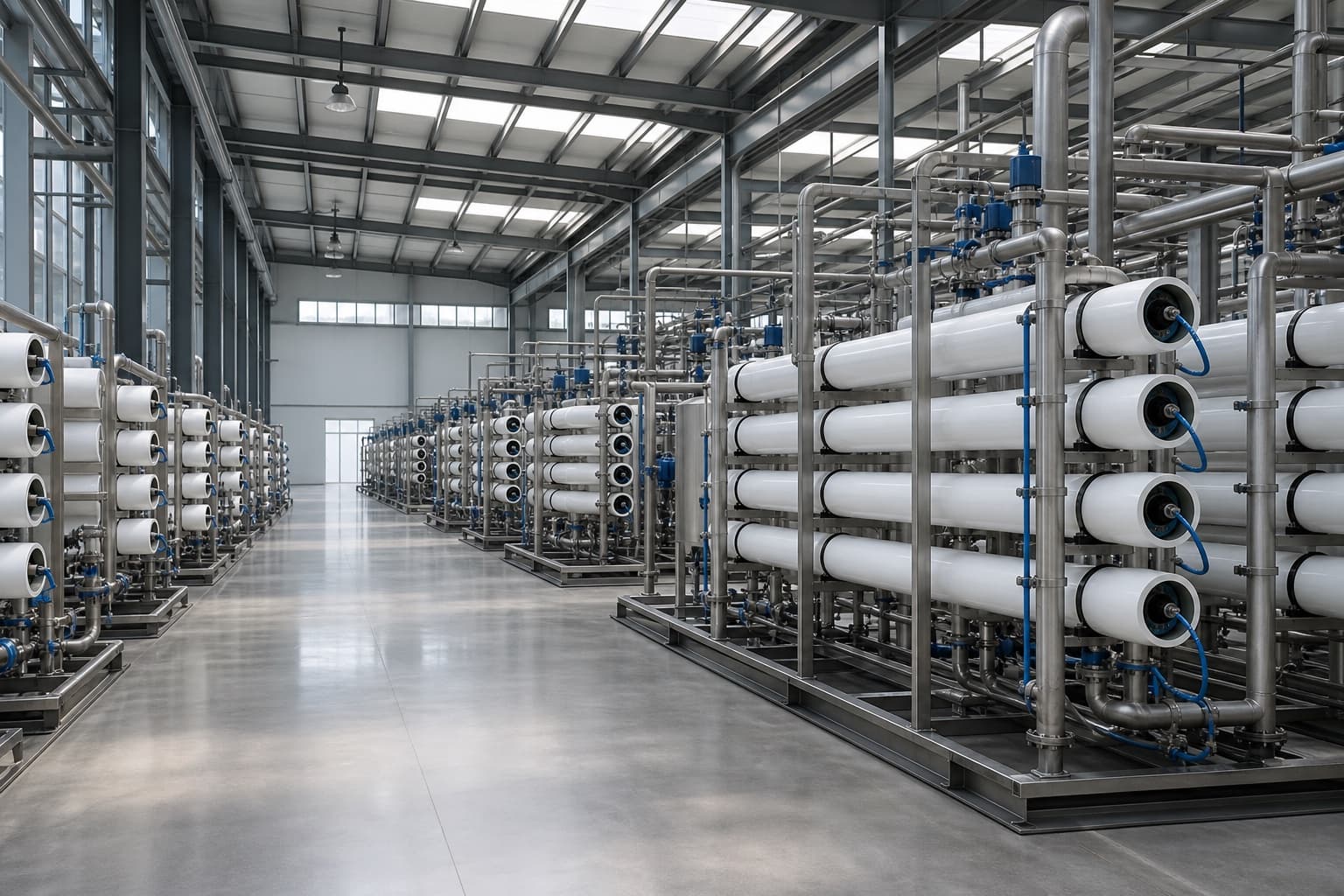
- Lower energy and capital than a thermal train
- 60–75%
- Water recovered across the membrane train
- 99%+
- Smaller plant footprint
- 70%
The challenge
Discharge limits are tightening across the GCC, China, India, the European Union, and the United States. Conventional reverse osmosis stops at about 90,000 mg/L, so the remaining concentration has been done thermally, at 25–60 kWh per cubic metre of water removed.
Energy
Evaporators and crystallizers dominate the operating cost of a ZLD plant.Capital
Thermal equipment in corrosion-resistant alloys sets the project budget.Footprint
Thermal trains are large, which rules them out on constrained and underground sites.
Approach
The membrane ZLD train
SEBRO, SAMRO and the MemBrine Concentrator each operate in their own salinity range. Most of the water is recovered on membranes; only the final residue reaches the crystallizer.
Typical configuration. Stream values for each project are set by its design basis.
- 01Feedindustrial or municipal water; pretreatment set by the chemistry
- 02SEBRO concentrate25,000 mg/L
- 03SAMRO concentrate90,000 mg/L
- 04MBC concentrate280,000 mg/L · 5–12 kWh/m³
- 05Recovered water99%+ of the feed across the train
- 06Solidscrystallizer sized for the residue only
| Stream | Name | Detail |
|---|---|---|
| 1 | Feed | industrial or municipal water; pretreatment set by the chemistry |
| 2 | SEBRO concentrate | 25,000 mg/L |
| 3 | SAMRO concentrate | 90,000 mg/L |
| 4 | MBC concentrate | 280,000 mg/L · 5–12 kWh/m³ |
| 5 | Recovered water | 99%+ of the feed across the train |
| 6 | Solids | crystallizer sized for the residue only |
Routes to zero liquid discharge
What it delivers
Compliance
Zero or minimal liquid discharge, depending on the permit. The final stage can be added later.Operating cost
5–12 kWh/m³ for membrane concentration, against 25–60 kWh/m³ thermally.Recovered water
More than 99% of the feed returned as reusable water across the full train.Standard equipment
Spiral-wound membranes and pressure vessels from established suppliers.
Project
King Salman Park: zero liquid discharge at municipal scale
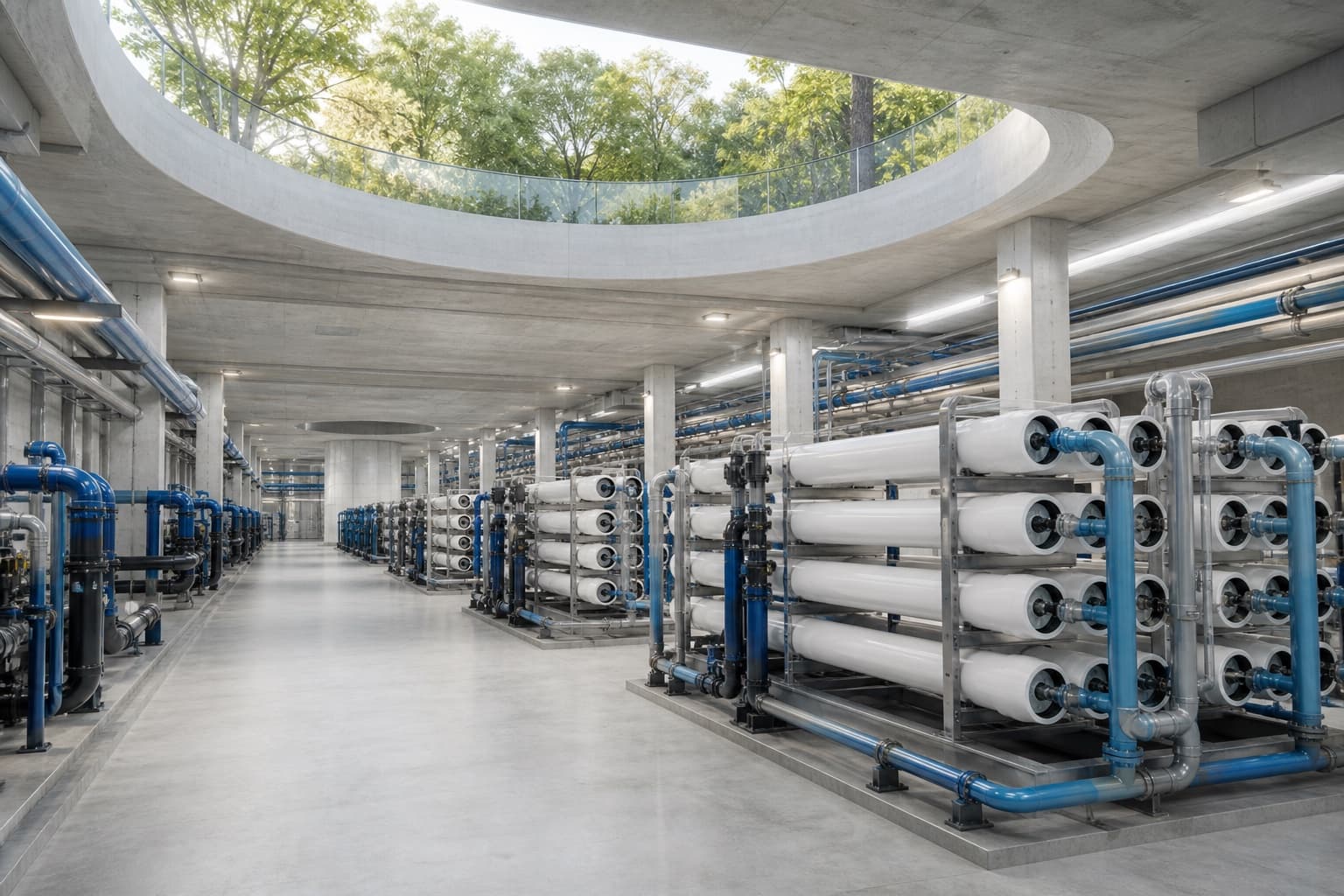
Treating 10,800 m³/day of CCRO® brine at 36,772 mg/L TDS to over 200,000 mg/L, in a footprint 70% smaller than conventional systems, for the world’s largest urban park.
- Brine treated
- 10,800m³/day
- Water recovery
- 82%
- Smaller footprint
- 70%
Discuss a project
Share the flow rate, water analysis, and treatment objective. Our process engineering team will follow up.