

Solutions
Lithium brine to product in months
Membrane concentration shortens solar evaporation from 18–24 months to 3–6, and brings dilute direct-extraction eluate to crystallization strength. It works with any DLE chemistry.
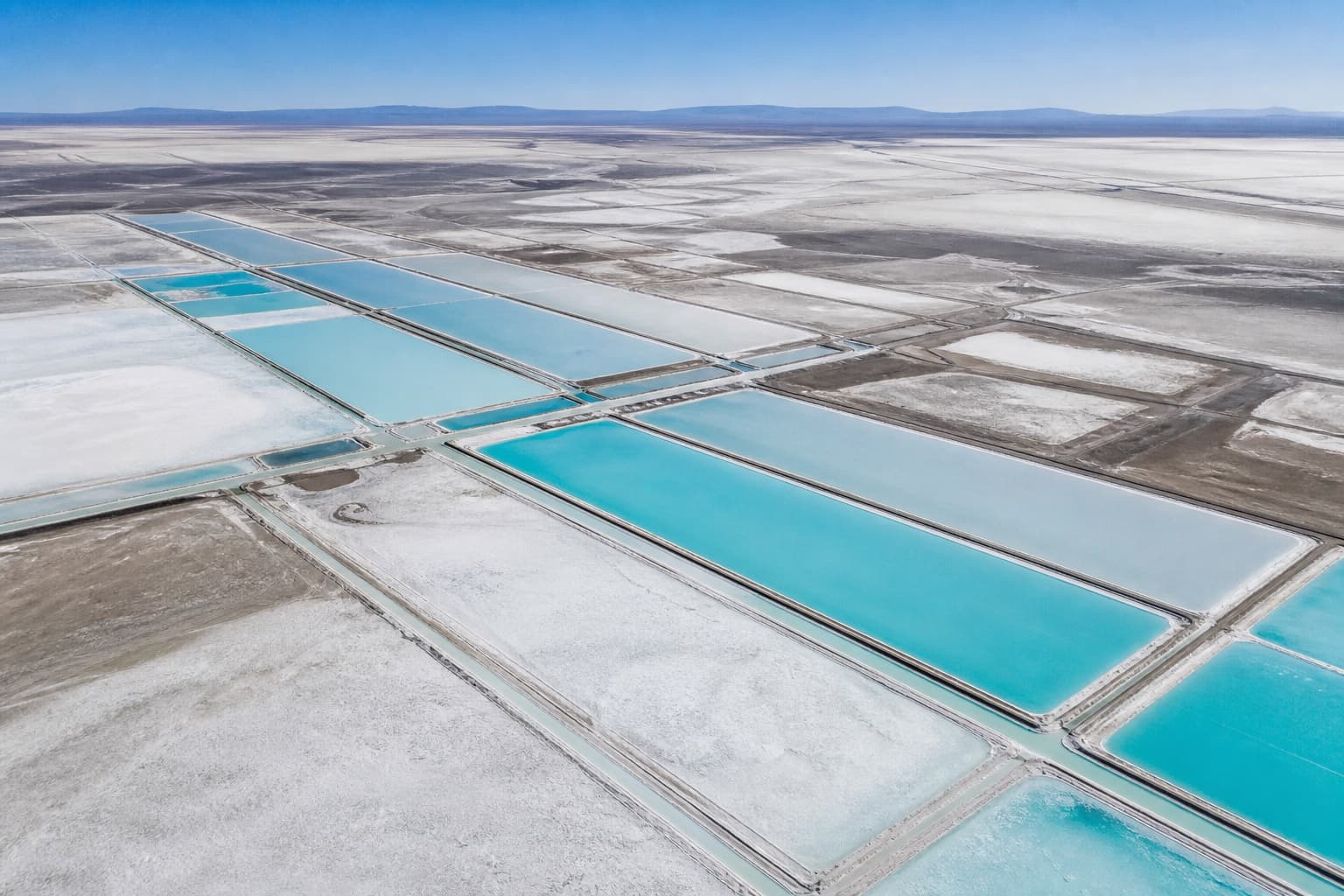
- Brine to product, against 18–24
- 3–6months
- Water recovered, against 5–20% in ponds
- 70–80%
- Lithium salt feed to crystallization
- 200g/L
The challenge
Lithium projects are held back by the concentration step. Solar evaporation is slow and loses most of the water to the atmosphere; direct extraction removes the ponds but produces a stream too dilute to crystallize economically.
Time
18–24 months between brine and concentrate in evaporation ponds.Water
80–95% of the brine volume lost to evaporation, often in water-scarce regions.Crystallizer size
Dilute DLE output forces an oversized, expensive crystallizer.
Approach
Two process routes
The MemBrine Concentrator either pre-concentrates brine ahead of an existing pond operation, or concentrates DLE eluate ahead of crystallization. The selective step stays with the project's chosen technology.
Pond route with membrane pre-concentration
Brine extraction
0.1–0.2% Li from salars or underground brines.
MBC pre-concentration
Lithium strength raised ahead of the pond.
Water recovery
70–80% of the volume recovered as clean water.
Final pond
Approximately 6% Li to the final evaporation stage.
Chemical plant
Crystallization-ready concentrate.
Direct extraction with membrane concentration
Pretreatment
Raw brine conditioned for selective extraction.
DLE
The project's chosen chemistry takes lithium from the matrix.
MBC concentration
Dilute eluate concentrated to crystallization strength.
Water reuse
Recovered water returned to the operation.
Crystallization
A 200 g/L feed sets a 50–90% smaller crystallizer.
Time from brine to product
Months from brine to product
| Process | Fastest (months) | Slowest (months) |
|---|---|---|
| Solar evaporation | 18 | 24 |
| With membrane pre-concentration | 3 | 6 |
What it delivers
Faster production
3–6 months from brine to product, against 18–24 months of solar evaporation.Smaller footprint
80–90% less land than conventional evaporation ponds.Smaller crystallizer
A 200 g/L lithium salt feed reduces crystallizer size by 50–90%.No fresh water make-up
Processing and regeneration run on water recovered from the brine.
Discuss a project
Share the flow rate, water analysis, and treatment objective. Our process engineering team will follow up.