

Solutions
Recovering saleable minerals from reject brine
Desalination and industrial brines carry magnesium, potassium, bromine, lithium, and salts. Osmosys concentrates them to the strength at which selective recovery becomes economic.
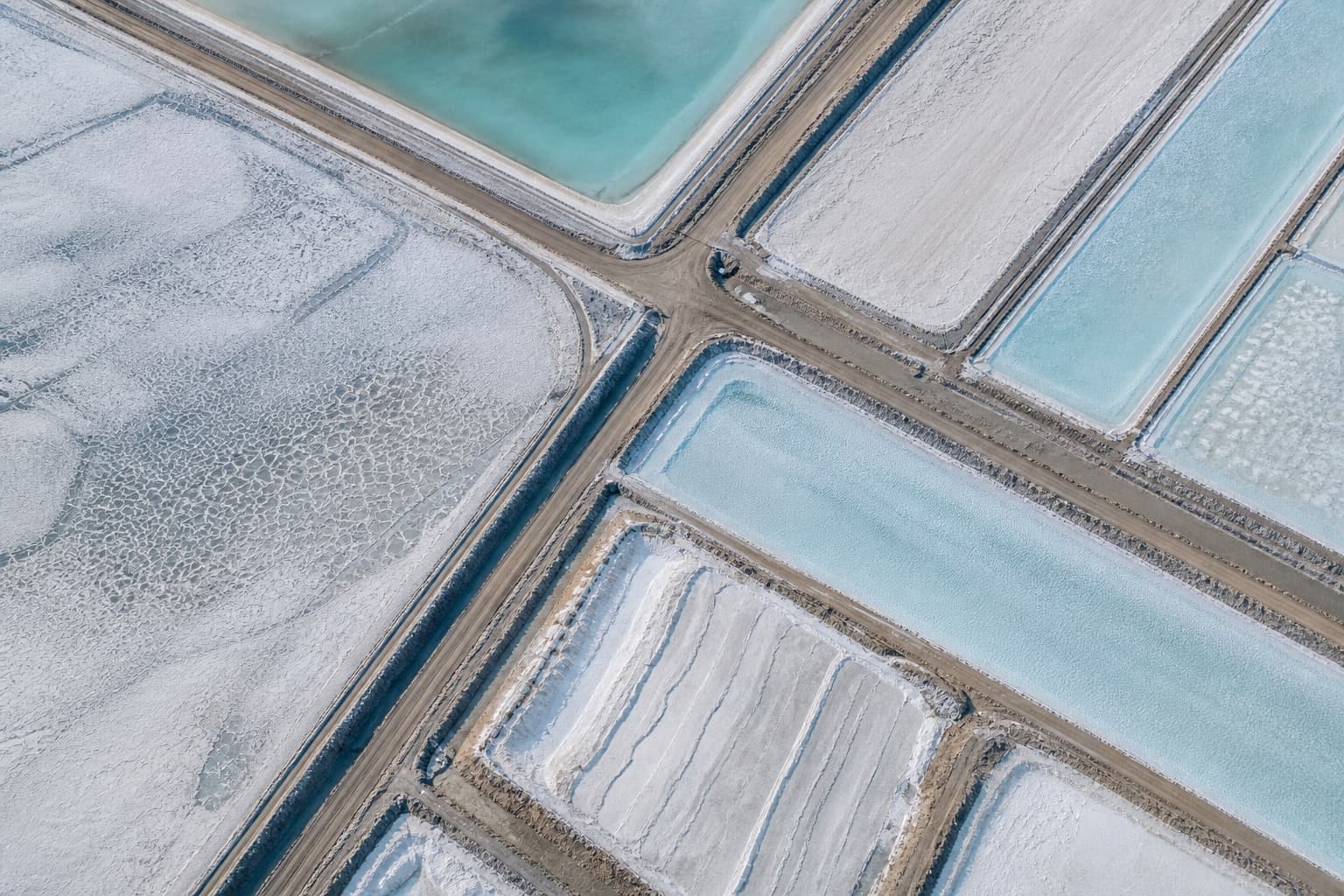
- Concentration ahead of recovery
- 220–280kmg/L
- Water recovered alongside the product
- 99%+
- Specific energy, against 25–60 thermal
- 5–12kWh/m³
The challenge
Most reject brines are treated as a disposal cost. The materials in them are too dilute to extract economically, and concentrating them thermally consumes the margin.
Dilute feed
Selective recovery processes need the target material at a workable concentration.Disposal cost
Brine disposal is priced by volume and rising where permits are most restrictive.Critical minerals
Demand for magnesium, potassium, bromine, and lithium continues to grow.
Approach
Concentration first, then selective recovery
SAMRO pre-concentrates and recovers clean water; the MemBrine Concentrator takes the stream to crystallization strength. Selective extraction and crystallization are integrated from qualified technology partners under one design basis.
01
SAMRO pre-concentration
Concentrates the dilute brine and recovers clean water at low specific energy.02
MBC final concentration
Takes the stream to 220,000–280,000 mg/L without thermal evaporation.03
Selective recovery
Extraction and crystallization from qualified partners, on the same design basis.04
Products and water
Saleable salts and minerals, with clean water returned at every stage.
Recoverable products
What it delivers
Product streams
Industrial sodium chloride, magnesium hydroxide, calcium chloride, potassium salts, and bromine.Lower disposal volume
What leaves as product no longer leaves as brine.Water
Clean water recovered for reuse at every stage of the train.One performance basis
Recovery, product quality, and energy guaranteed for the complete train.
Project
King Salman Park: zero liquid discharge at municipal scale
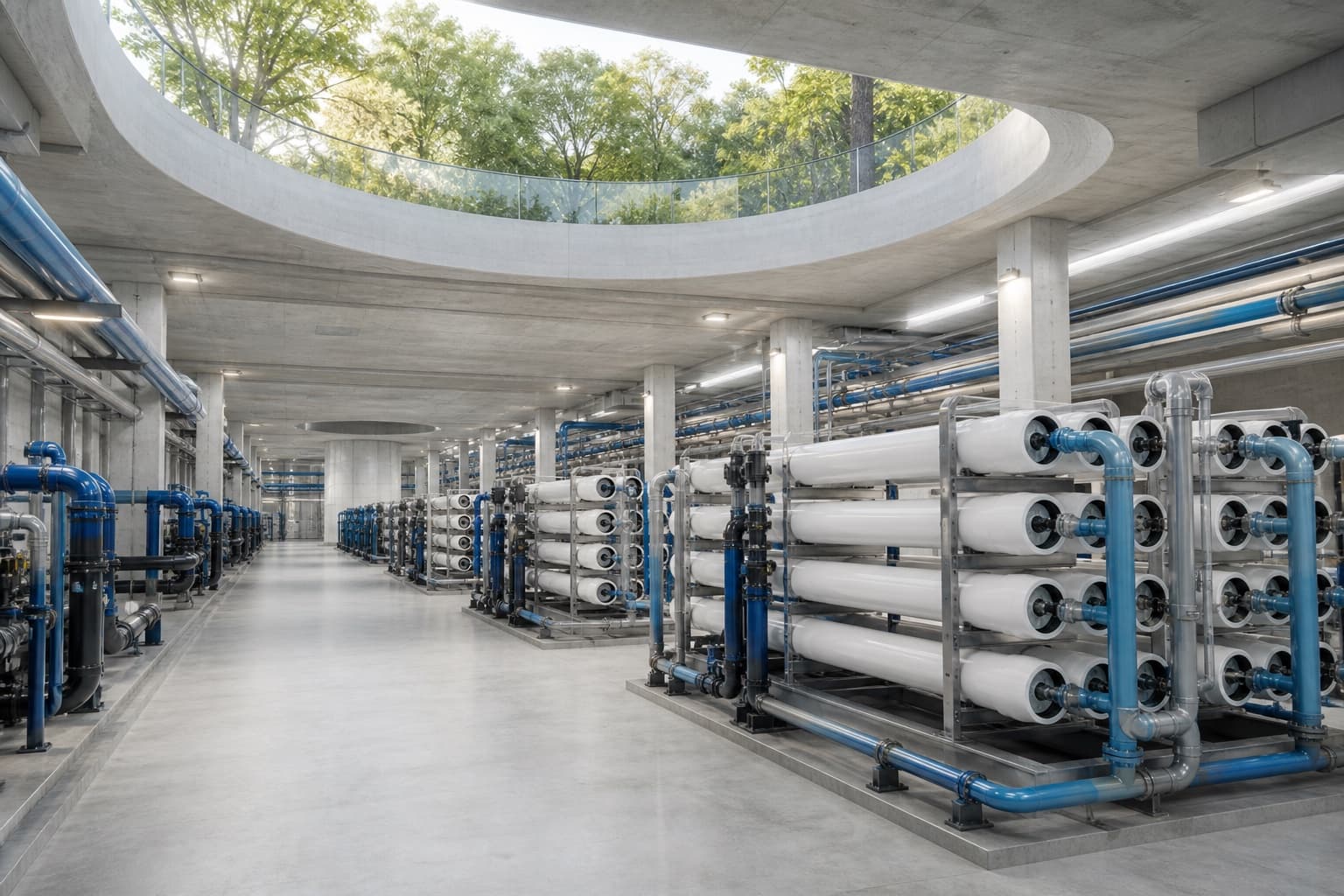
Treating 10,800 m³/day of CCRO® brine at 36,772 mg/L TDS to over 200,000 mg/L, in a footprint 70% smaller than conventional systems, for the world’s largest urban park.
- Brine treated
- 10,800m³/day
- Water recovery
- 82%
- Smaller footprint
- 70%
Discuss a project
Share the flow rate, water analysis, and treatment objective. Our process engineering team will follow up.